
A Major Step Forward for Reality Capture in Construction
Leica Launches the New RTC Scanner Family
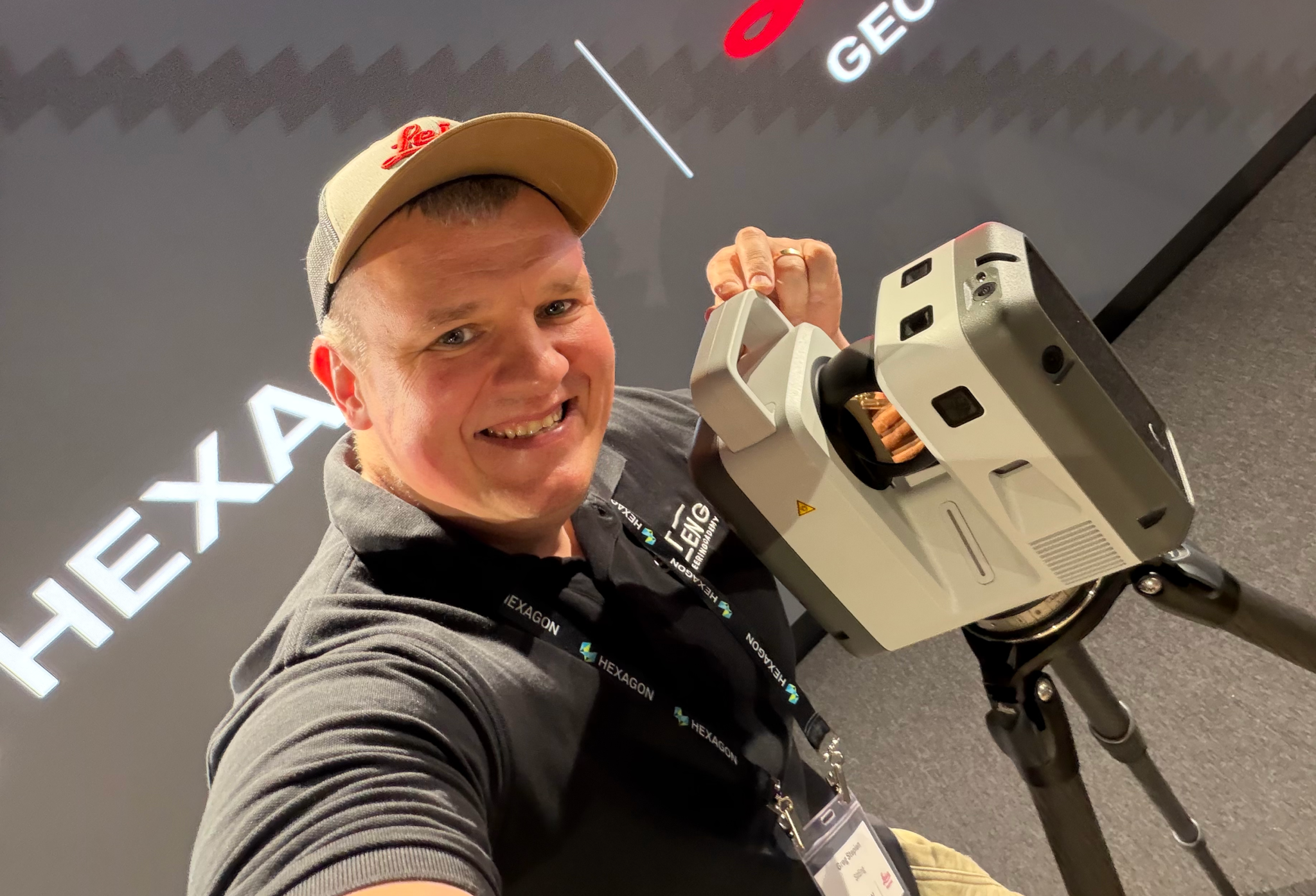
I recently had the pleasure of attending the launch event for the new Leica RTC scanner family, and it was one of the most exciting construction technology events I’ve been to in recent years.
Like many professionals working in reality capture, laser scanning, and digital construction, I was curious to see how Leica could improve on the hugely successful Leica RTC360. After all, the RTC360 has long been regarded as one of the best laser scanners available for construction, surveying, and BIM workflows.
After seeing the new range in action, it’s clear that Leica has taken a significant step forward.

A New Leica RTC Scanner Family
Instead of offering a one-size-fits-all solution, Leica has introduced an entire family of scanners, including the RTC300, RTC500, and RTC700.
This is a smart approach because not every project requires the highest-specification scanner. Different construction projects have different requirements, budgets, and levels of detail. By offering multiple models, Leica gives reality capture professionals the flexibility to choose the right scanner for the right job.
Whether you’re carrying out progress monitoring, as-built surveys, quality assurance, or digital twin creation, there’s now a scanner designed to match your workflow.
Reality Capture Is No Longer Just About Hardware
One of the biggest takeaways from the event was that Leica’s innovation goes far beyond the scanner itself.
The new ecosystem includes:
-Advanced scanner hardware
-Updated software
-Improved cloud connectivity
-Livelink – new workflow standard
-Faster collaboration between site and office teams
This integrated workflow will make it much easier for project teams to capture data on site, share it instantly with the office, and collaborate in real time.
For construction companies embracing digital transformation, this connected approach is just as important as improvements in scanning speed or accuracy. Reality capture today is about creating a seamless flow of information throughout the entire project lifecycle.

Bringing Site and Office Together
One feature that particularly impressed me was Leica’s focus on connecting field teams with office-based workflows.
Anyone working in construction knows that delays often happen because information takes too long to move between site and the office. By improving cloud collaboration and data sharing, Leica is helping reduce these bottlenecks.
This means faster decision-making, improved communication, and ultimately better project delivery.
As the construction industry continues to adopt digital workflows, this kind of connectivity will become increasingly valuable.
A Journey Through the History of Laser Scanning
One of my favourite parts of the event wasn’t actually the new technology, it was seeing where it all began.
Leica displayed some of its earliest laser scanners alongside the latest RTC family, creating a fascinating timeline of innovation.
The difference was remarkable.
The original scanners were enormous, incredibly heavy, and required hours to complete a single scan before lengthy processing back in the office.
Standing next to those early systems really highlighted just how far laser scanning technology has evolved.
Today’s RTC scanners are compact, portable, incredibly fast, and capable of producing exceptionally accurate point cloud data in a fraction of the time.
It’s a powerful reminder of how quickly construction technology and reality capture continue to evolve.
Great Conversations with Industry Leaders
Another highlight of the event was catching up with friends and colleagues from across the industry.
It was great to hear different perspectives on where reality capture, BIM, and digital construction are heading.
I particularly enjoyed speaking with industry leaders including Mark Wakeling from Plowman Craven, Vid Gamage from Winvic and Leica pros like Luke Hill-Cottingham and Paul Burrows. Hearing their thoughts on the new scanner range and the wider direction of construction technology added another valuable dimension to the day.
What made these conversations especially interesting was that many of them have been using Leica scanners for years. Some even started with the earliest generations of laser scanners, giving them a unique perspective on just how transformative today’s technology has become.
Their excitement about the new RTC family said a great deal.
The Future of Laser Scanning in Construction
The launch of the new Leica RTC scanner family isn’t simply about introducing faster hardware.
It’s about making reality capture more accessible, more connected, and more efficient across the entire construction process.
As projects become increasingly data-driven, the ability to capture accurate site information quickly and seamlessly integrate it into digital workflows will be essential.
From digital twins and BIM to progress monitoring and quality assurance, laser scanning is becoming a standard part of modern construction—not just a specialist service.
After attending the launch, I’m confident that Leica has positioned the new RTC family to play a major role in the next generation of construction technology.
I’m looking forward to seeing these scanners used on real projects and exploring how they can continue to improve productivity, collaboration, and the quality of digital construction workflows.
Comments are closed