
Converge Sensors
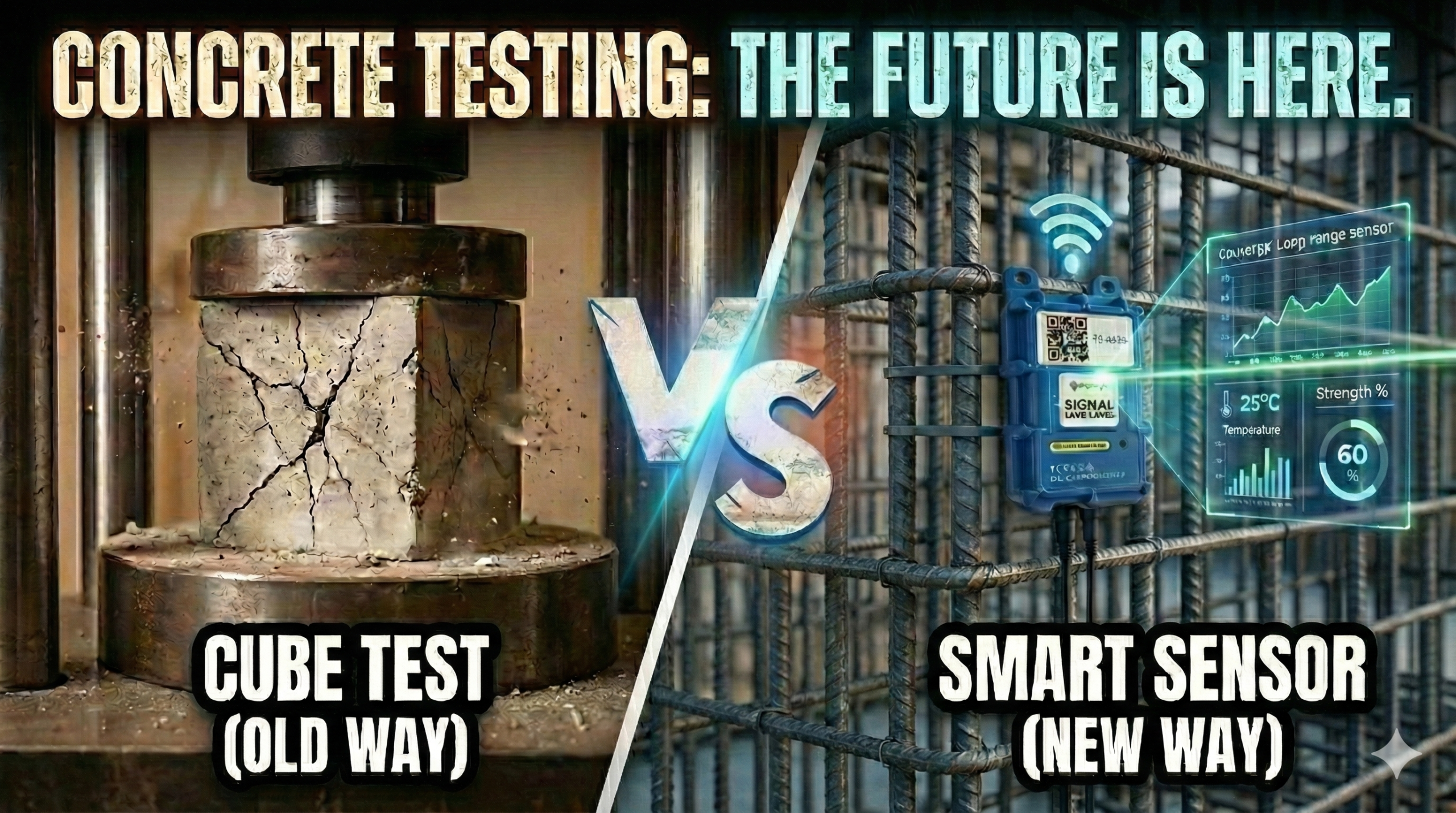
What if your structure could tell you exactly how it’s curing in real-time? Let’s be honest: on most sites, we are still monitoring concrete like it’s the 1950s. We rely heavily on crushing cubes—samples that are cured in a shed, not in the actual structure. While cubes are vital for compliance, relying on them for critical site decisions is outdated.
Today, I want to show you a revolution in this field: the new Converge long range sensors. These wireless concrete sensors are changing how we approach striking and stressing on site.
The Problem: Cubes vs. Reality
The biggest issue with traditional testing is that it’s not representative. A cube sitting in a temperature-controlled bath doesn’t know it’s freezing on site or that the slab is generating massive heat due to its mass. If you strike formwork based on bad data, you risk safety. If you wait too long for lab results, you lose money.
This is where modern concrete sensors step in. The goal is simple: stop guessing and start measuring the reality of your pour.
The Solution: Converge Long Range Sensors
I’ve been testing the new Converge long range sensors, and they are a massive upgrade over previous Bluetooth models. Here is why these specific concrete sensors matter for engineers:
Incredible Range: As the name suggests, the Converge long range sensors communicate up to 300m to a gateway hub (using a lower frequency). On a large project like a viaduct or high-rise, you can cover the entire site with just one or two hubs and collect data continuously from the office.
Fully Embedded & Wireless: No external cables, no power source needed. You just drop these concrete sensorsinto the rebar cage, pour, and they start working immediately.
Data-Driven Decisions: Through the Concrete DNA app, you get a notification the moment your concrete hits the required strength. Bang! You get the alert, you issue the permit to strike or stress, and you move on.
Field Test: Using Concrete Sensors on a Real Site
It’s easy to talk about specs, but how do these Converge long range sensors perform in the real world? I visited the Morrisroe team at the Natural History Museum project to see them in action. They are dealing with post-tensioned (PT) slabs, where timing is everything.
Instead of waiting for crush results, they rely on these concrete sensors for live data. As Voytech, their project engineer, told me: “We receive all the information live… it saves time.”
Conclusion The future of construction is data-driven. While we won’t get rid of cubes entirely for final compliance, the days of relying on them for daily progress are numbered. With tools like the Converge long range sensors, we can finally make decisions based on reality, speed up our programs, and sleep well at night knowing the structure is safe.
I will be diving deeper into concrete sensors and strength monitoring in my upcoming “Concrete Series” after the New Year, so stay tuned!
Comments are closed